
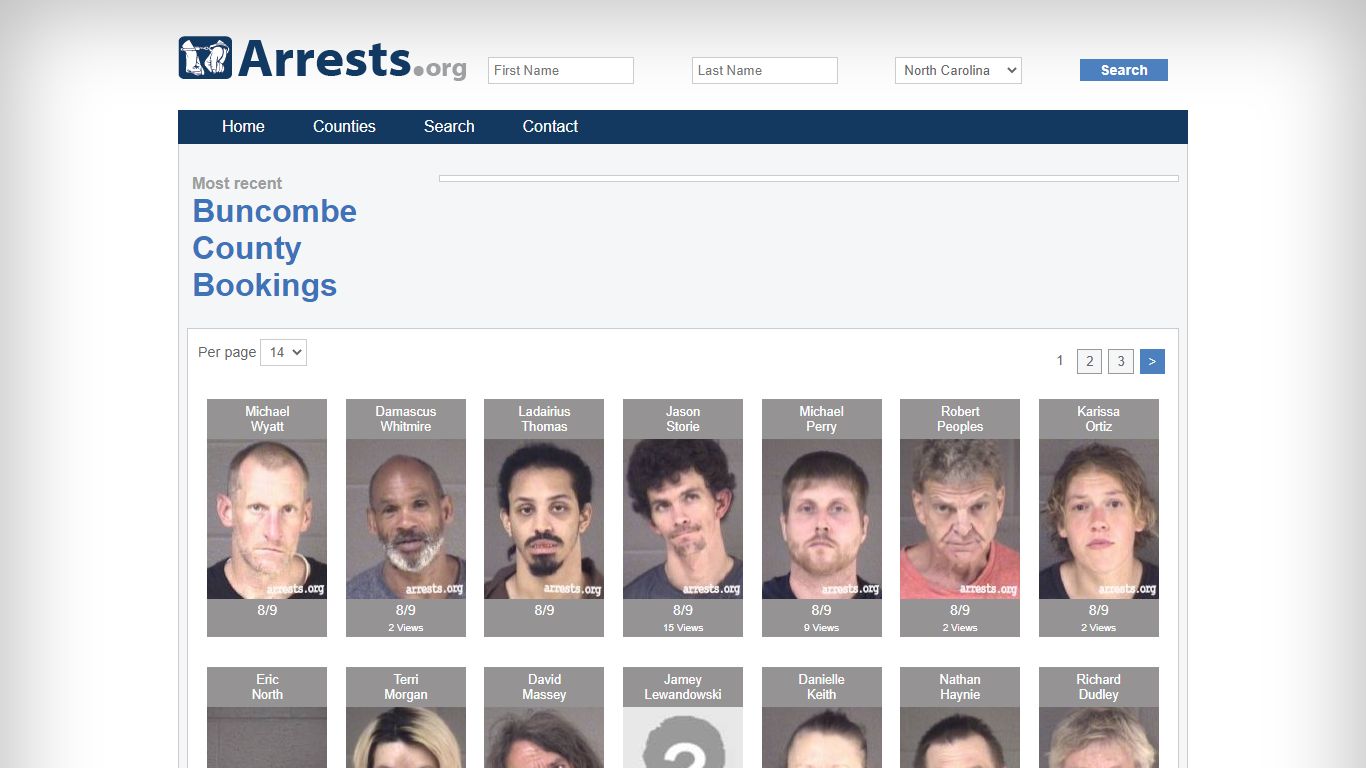
Buncombe County arrests and inmate search tools give you fast, public access to jail records, booking details, mugshots, and inmate status in Asheville, North Carolina. Over 15,000 mugshots are updated daily, with recent bookings showing 11 arrests on Sunday, December 5, 2024; 15 on Monday, December 6; 17 on Tuesday, December 7; 19 on Wednesday, December 8; 30 on Thursday, December 9; and 24 on Friday of the same week. Each record lists the booking date, charges, and arresting agency. These online tools help families, employers, and legal professionals find current inmate information. Always verify critical details with official court records from the Buncombe County Clerk’s Office or the North Carolina State Attorney’s Office.
How to Search for Inmates in Buncombe County
Anyone can search for inmates in Buncombe County using free online portals. Enter a full or partial name, date of birth, or booking number to find results in seconds. The search shows the inmate’s photo, legal name, housing unit, bond amount, and charge description. The database holds about 1,200 active records, covering everyone from first-time offenders to long-term detainees. Results include a link to request full case files through the county’s public records form. This service works 24/7 and updates every time someone is booked or released.
Buncombe County Jail Facilities and Capacity
Buncombe County operates three detention centers: the main Buncombe County Jail in Asheville, the Asheville Transfer Center, and the Western Regional Detention Facility. Together, they provide 165,051 inmate-days per year and can hold up to 524 people at full capacity. The main jail has 12 high-security cells for violent or high-risk inmates, each with reinforced doors and 24/7 monitoring. These facilities process an average of 2,052 bookings yearly, handling everything from traffic tickets to felony charges. All three centers follow strict state guidelines for safety, health, and inmate rights.
Official Inmate Search Tools and Databases
Several official platforms offer real-time inmate data for Buncombe County. The Police-to-Citizen portal displays names, mugshots, charges, and release dates. It also provides downloadable intake reports with officer badge numbers and arrest locations. Users can filter by offense type—like drug crimes or traffic violations—and sort by booking date. Another trusted source is the Sheriff’s Office website, which hosts the jail roster updated instantly after each booking. These tools are free, public, and designed for transparency.
Arrest Statistics and Crime Trends in Buncombe County
Buncombe County recorded 5,688 arrests over the past three years. In 2017, the arrest rate was 613.07 per 100,000 residents—17.04% lower than the national average of 739.02. That year, none of the arrests were for violent crimes. Most involved traffic violations, minor drug offenses, or disorderly conduct. Compared to nearby counties like Cabarrus, Buncombe has a lower violent crime rate. This shows a focus on non-violent law enforcement and community safety programs.
How to Contact the Buncombe County Jail
If online search tools are down or outdated, call the jail information desk at 828-250-4550. The line is open 24 hours a day, seven days a week. When calling, give the inmate’s full legal name and birthdate if known. The clerk will confirm housing location, bond status, and next court date. This service helps families get accurate updates outside business hours or during system outages.
Visitation Rules and Schedules
Visitation at the Buncombe County Detention Facility happens every Saturday from 11:00 a.m. to 3:30 p.m. Each visit lasts 20 minutes and must be booked at least 24 hours in advance. First-time visitors register at the front desk by calling (828) 250-4610 or (828) 250-4557 and showing a valid photo ID. Inmates can have up to two visitors per session. Everyone must follow the dress code posted on the Sheriff’s Office website. No phones, bags, or food are allowed inside.
Electronic Inmate Roster and Real-Time Updates
The Buncombe County Jail keeps an electronic roster searchable by name, booking number, or case number. Records show intake date, alleged offense, bond amount, and next court appearance. Most inmates are awaiting trial, sentencing, or transfer to state prison. The roster updates in real time whenever someone is booked or released. This ensures the public always sees the most current information without delays.
Jail History and Management
The Buncombe County Jail in Asheville opened in 1984 as a minimum-security adult detention center. It has a licensed capacity of 524 beds and processes about 2,052 bookings each year. Inmates are housed in one of three units, each supervised by trained correctional officers. The North Carolina Sheriff’s Department oversees operations, including health services, safety checks, and inmate accountability. The facility follows state and federal standards for humane treatment.
Mugshot Availability and Public Records
Mugshots from Buncombe County are published online through multiple platforms. Sites like MugshotsOnline.com collect images from public records and law enforcement releases. These include neighboring counties such as Blount County (TN), Catawba County (NC), and Henderson County (NC). The site notes that an arrest does not mean conviction. Users should check court documents for final legal outcomes. All mugshots are considered public unless sealed by a judge.
Sheriff’s Office Structure and Services
The Buncombe County Sheriff’s Office in Asheville manages four main divisions: Detention, Enforcement, Support Operations, and Community Services. The Detention Division runs the jails. Enforcement handles patrols and investigations. Support Operations manages records and technology. Community Services offers victim advocacy, youth programs, and public education. The office emphasizes transparency, with online access to inmate records, performance reports, and service requests.
Bond Information and Release Procedures
Bond amounts for Buncombe County inmates appear in search results and jail rosters. Bonds can be posted at the jail or through a licensed bail bondsman. Once paid, the inmate is released unless held for other charges. Release times depend on processing speed and court schedules. Families can check bond status online or by phone. Failure to appear in court may result in bond forfeiture and additional charges.
Court Dates and Legal Proceedings
Each inmate’s next court date is listed in the jail roster and search tools. Court appearances happen at the Buncombe County Courthouse in Asheville. First hearings usually occur within 72 hours of booking. Felony cases move to superior court; misdemeanors stay in district court. Defendants should contact their attorney or the public defender’s office for case updates. Missing a court date leads to a warrant and possible rearrest.
Medical and Mental Health Services
Inmates at Buncombe County facilities receive basic medical and mental health care. Nurses and doctors visit regularly. Emergency care is available 24/7. Mental health screenings happen at intake. Serious conditions are treated at local hospitals. Families can request updates if the inmate consents. The jail follows NC health standards and reports annually on care quality.
Commissary and Inmate Accounts
Inmates can buy snacks, hygiene items, and stationery from the jail commissary. Money can be added to their account online, by phone, or at kiosks in the jail lobby. Funds are held securely and returned upon release. Spending limits apply. Commissary orders are delivered weekly. This system helps inmates maintain dignity and stay connected to daily routines.
Work Programs and Education
Buncombe County Jail offers work programs for eligible inmates. Tasks include cleaning, kitchen duty, and maintenance. Some inmates attend GED classes or vocational training. These programs reduce idleness and prepare people for life after release. Participation is voluntary and based on behavior and risk level. Certificates earned can help with future jobs.
Transfer to State Prison
After sentencing, most inmates are transferred to North Carolina state prisons. The transfer happens within days of the court order. Families are notified of the new facility. Inmates lose access to local visitation but can receive mail and phone calls. The state Department of Public Safety manages all transfers. Buncombe County only holds pretrial detainees and short-term sentences.
Public Records Requests
For detailed case files, submit a public records request to the Buncombe County Clerk’s Office. Forms are available online or at the courthouse. Requests may take days or weeks to process. Some records are free; others cost a small fee. Juvenile records and sealed cases are not public. Always cite the inmate’s name and booking number to speed up the process.
Privacy and Legal Rights
Arrest records are public, but they do not prove guilt. Inmates have rights to fair treatment, legal representation, and medical care. Publishing mugshots is legal, but misuse can lead to lawsuits. Employers and landlords cannot discriminate based on arrest alone. Expungement is possible for dismissed or acquitted cases. Consult a lawyer for personal record issues.
Common Reasons for Booking
Most Buncombe County bookings involve traffic violations, drug possession, theft, or disorderly conduct. DUIs, domestic disputes, and probation violations are also frequent. Violent crimes are rare but handled strictly. First-time offenders may qualify for diversion programs. Repeat offenses often lead to longer stays. The jail focuses on safety and rehabilitation.
How to Help an Inmate
Families can support inmates by adding money to their account, sending approved mail, and attending visits. Avoid discussing case details in calls or letters. Send only items allowed by jail rules. Stay in touch with the inmate’s lawyer. Emotional support improves mental health and behavior inside. Never bring contraband—it can extend the inmate’s stay.
Frequently Asked Questions
How often is the inmate roster updated?
The roster updates in real time after every booking or release. You can trust the information is current.
Can I visit an inmate on weekdays?
No. Visits only happen on Saturdays from 11:00 a.m. to 3:30 p.m. All visits must be scheduled 24 hours ahead.
Are mugshots removed after release?
No. Mugshots remain online as public records unless a judge orders removal. Arrest does not equal conviction.
What if I can’t find an inmate online?
Call 828-250-4550. Staff will help locate the person using their name and birthdate.
Can I send books or clothes to an inmate?
No. Only money, approved mail, and legal documents are allowed. All items are screened.
How do I check bond status?
Search the inmate’s name online or call the jail. Bond amounts and payment options will be listed.
Is there a fee to search for inmates?
No. All official search tools are free. Avoid third-party sites that charge for public data.
Official Contact Information
Buncombe County Sheriff’s Office
Address: 202 Haywood St, Asheville, NC 28801
Phone: (828) 250-4610
Visiting Hours: Saturdays, 11:00 a.m. – 3:30 p.m.
Website: https://www.buncombecounty.org/governing/depts/Sheriff/
Inmate Search: https://buncombecountyso.policetocitizen.com/Inmates/Catalog
